Introduction
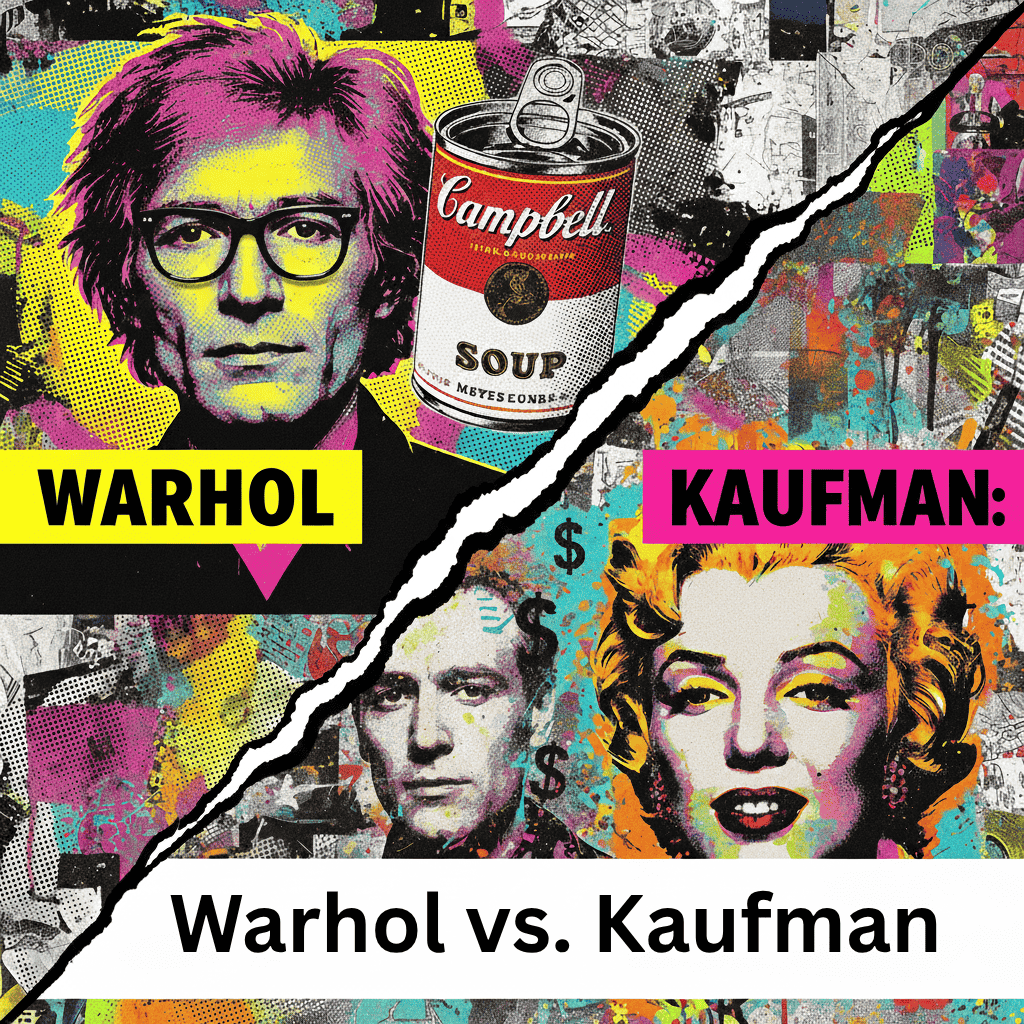
When people think of Pop Art, Andy Warhol’s Campbell’s Soup cans and Marilyn Monroe portraits usually come to mind. Yet one of Warhol’s most important protégés, Steve Kaufman, went on to transform the movement with his own socially engaged spin. This article explores the mentor‑muse relationship between Warhol and Kaufman and how it sparked a new direction in Pop Art.
Warhol as Mentor
Andy Warhol was the central figure of the Pop Art movement of the 1960s. He turned everyday consumer goods and celebrities into art, making silkscreen prints that blurred the line between fine art and commercial imagery. In the late 1970s Steve Kaufman enrolled at the School of Visual Arts in New York. There he met Andy Warhol and soon became his assistant at Warhol’s legendary Factory. Working side by side, Kaufman learned Warhol’s screen‑printing techniques and absorbed his philosophy of making art accessible to the masses.
Kaufman Finds His Own Voice
While Warhol taught Kaufman the mechanics of Pop Art, Kaufman quickly moved beyond mere imitation. He launched SAK Studio in the 1980s and later relocated to Los Angeles, where he developed a new style he called “Comic Book Pop Art,” using superheroes as icons. Kaufman also hired ex‑gang members and at‑risk youth to work in his studio, reflecting his belief that art could be a force for social change. This philanthropic focus distinguished him from his mentor and gave his work a distinctly humanist edge.
Mentor vs. Muse: A Two‑Way Inspiration
Warhol and Kaufman influenced each other in subtle ways. Warhol’s pioneering use of celebrity imagery inspired Kaufman to create vivid portraits of icons like Marilyn Monroe and Muhammad Ali. In turn, Kaufman’s commitment to charity work showed Warhol that Pop Art could have a social mission. The dynamic between mentor and muse created fertile ground for innovation, expanding the vocabulary of Pop Art beyond Warhol’s original boundaries.
The Birth of a New Pop Movement
The collaboration between Steve Kaufman and Robert Womack at RAWSAK Studios further broadened the movement. RAWSAK was born from the artists’ shared desire to blend iconic imagery with contemporary narratives. Their mission is to honor the Pop Art legacy while fostering creativity and using art to drive social impact. In this sense, Kaufman’s journey from Warhol’s assistant to RAWSAK co‑founder represents the evolution of Pop Art from a celebration of consumer culture to a platform for cultural dialogue.
Legacy and Takeaway
Warhol’s influence on Kaufman can be seen in every silkscreened portrait, yet Kaufman’s humanitarian approach and collaboration with Womack transformed Pop Art into something more inclusive and empathetic. Today, RAWSAK Studios continues to produce works that bridge the gap between vintage Pop Art and modern social consciousness. By understanding the mentor‑muse relationship between Warhol and Kaufman, collectors gain a deeper appreciation for the richness of Pop Art.
Interested in collecting authentic Pop Art that carries this legacy forward? Browse our collection at PopArtSales.com or visit the RAWSAK Studios website to explore the latest works.