Introduction
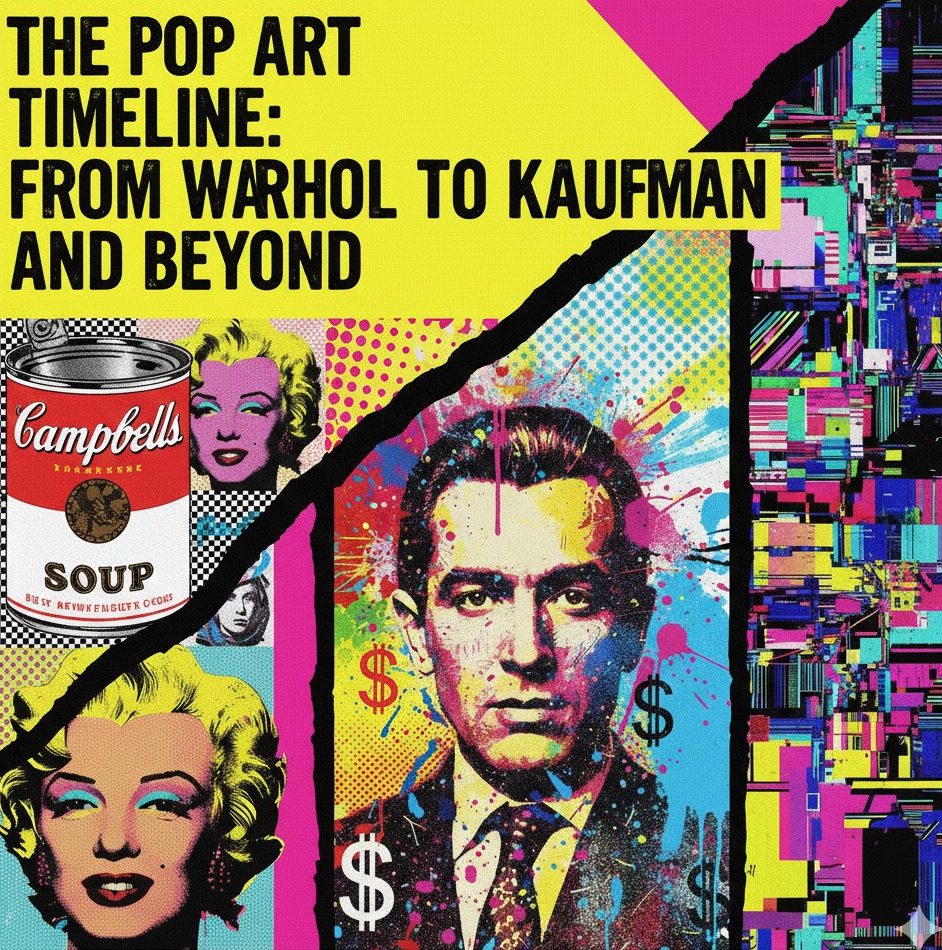
Pop Art reshaped the art world by bringing everyday icons into bold color and mass reproduction. From Andy Warhol’s Campbell’s Soup cans to Steve Kaufman’s comic-book collages, the movement has continually evolved. This timeline traces Pop Art’s journey from its 1960s origins to the collaborations at RAWSAK Studios and beyond.
Steve Kaufman Meets Andy Warhol
Kaufman enrolled at the School of Visual Arts in New York and met Andy Warhol, becoming his assistant at The Factory from 1978 to 1981. Under Warhol’s mentorship he mastered screen printing and embraced the idea of making art accessible to the masses. This period defined the second generation of Pop Art.
Comic Book Pop Art and RAWSAK Studios
In the mid-1980s Kaufman moved his studio to Los Angeles and launched his “Comic Book Pop Art” style, transforming classic comic characters into fine art. He hired ex-gang members to work in his studio and expanded the scope of Pop Art to include social activism. The collaboration between Kaufman and Robert Womack led to the formation of RAWSAK Studios, blending iconic and contemporary elements.
Expansion and Social Impact
Throughout the 1990s and beyond, Kaufman produced limited editions of Beethoven, Marilyn Monroe and other icons that sold out and broke sales records. He worked with parole officers, hiring over 200 youth and increasing his charity involvement to over 100 organizations. By 1997–98 he had employed 546 ex-gang kids and supported more than 175 charities. His Give Kids A Break foundation continued this mission.
Pop Art Today and Beyond
RAWSAK Studios continues to honor the legacy of Kaufman and Warhol by fostering creativity and using art as a platform for social impact. Contemporary artists build on their techniques with digital media, NFTs and global collaborations. The Pop Art timeline doesn’t end with Kaufman—it continues through artists who blend popular culture, activism and new technology.
Explore the evolution of Pop Art for yourself. Visit RAWSAK Studios to learn about ongoing projects, read our exclusive interview with Robert Womack, and browse our Pop Art collection to collect a piece of history.